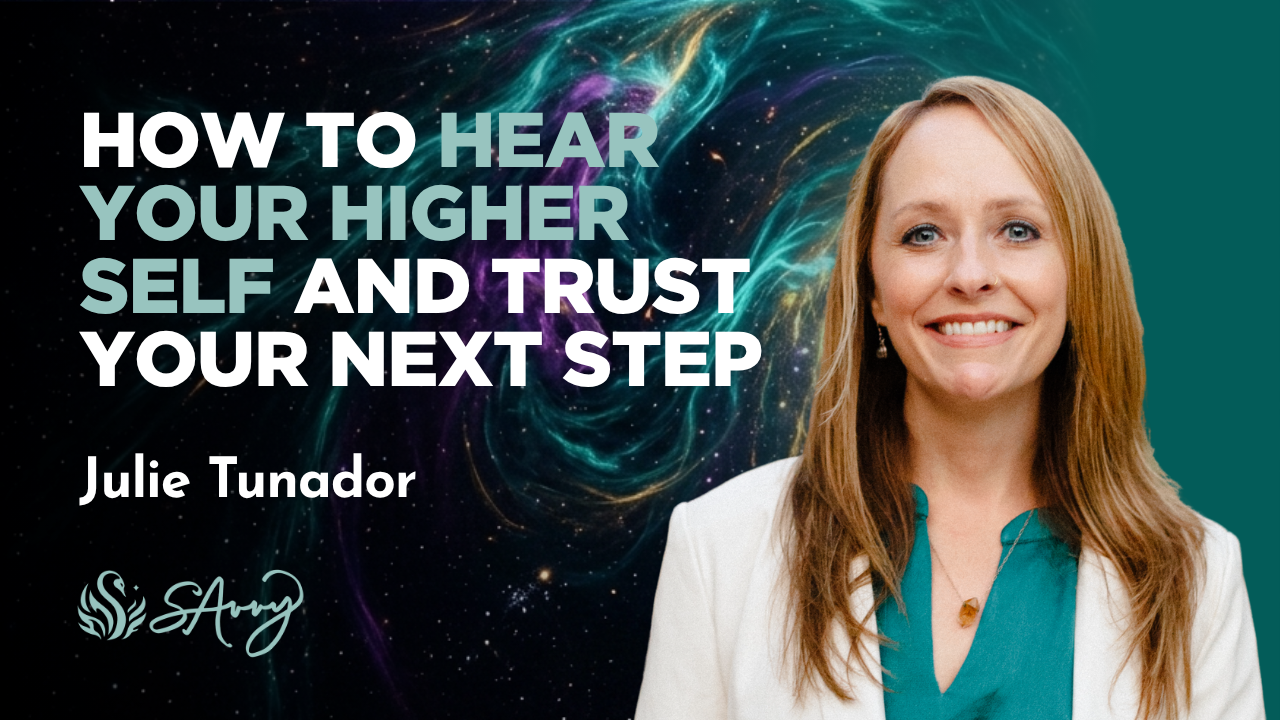
Julie Tunador on redefining consciousness
In this episode, we sit down with Julie Tunador to explore consciousness from both practical and expansive angles. She explains how her path began in crime scene investigation, then moved into hypnosis, coaching, and consciousness studies. As a result, the conversation stays grounded while reaching into bigger questions. Julie defines consciousness as awareness within us and around us. She also describes a deeper oneness that connects each person to something larger. That framing gives us a clearer way to think about intuition, purpose, and growth.
What Julie Tunador says about listening inward
We also unpack how to hear the higher self without making it mystical or complicated. Julie says many people meditate, yet few pause long enough to simply listen. So, she shares a straightforward practice. Set an intention, get quiet, and listen for a few minutes each day. Over time, that relationship with the higher self can become easier to recognize. She also explains how nature can support that process. Instead of chasing a dramatic experience, she points to stillness, attention, and trust.
Listening inward with Julie
From there, we move into tools people actually use when they want clearer guidance. Julie walks through pendulum work, including how to set it up, how to ask better questions, and how to avoid vague answers. She explains why specific questions matter, and why emotional attachment can distort what we hear. That leads into a bigger idea. If we want honest guidance from the higher self, we have to stop pushing for the answer we prefer. Instead, we need to clear the noise, release pressure, and stay open.
The episode also covers the bridge between science and spirituality. Julie argues that many things once labeled magical later became measurable. Because of that, she sees science and spirituality moving toward the same frontier. We talk about energy, noetic science, near death experiences, and out of body research. Then, we get into suggestibility and why some people access altered states faster than others. Her explanation makes hypnosis feel far more practical. It also helps explain why some people struggle with the higher self even when they want that connection.
Later, we talk about hypnosis, expectation, and resistance. Julie explains that people often enter hypnosis expecting a movie scene. However, some people sense before they visualize. Others question every image the moment it appears. So, instead of forcing certainty, she recommends staying curious and letting the experience unfold. We also discuss past life regression, parallel lives, and those moments when reality suddenly feels dreamlike. Julie doesn’t push certainty. Instead, she focuses on what these experiences reveal, change, and heal. By the end, the conversation turns toward surrender, purpose, and trust. She makes the case that the higher self becomes easier to follow when we stop organizing life around fear. Then, purpose becomes less abstract and more lived.