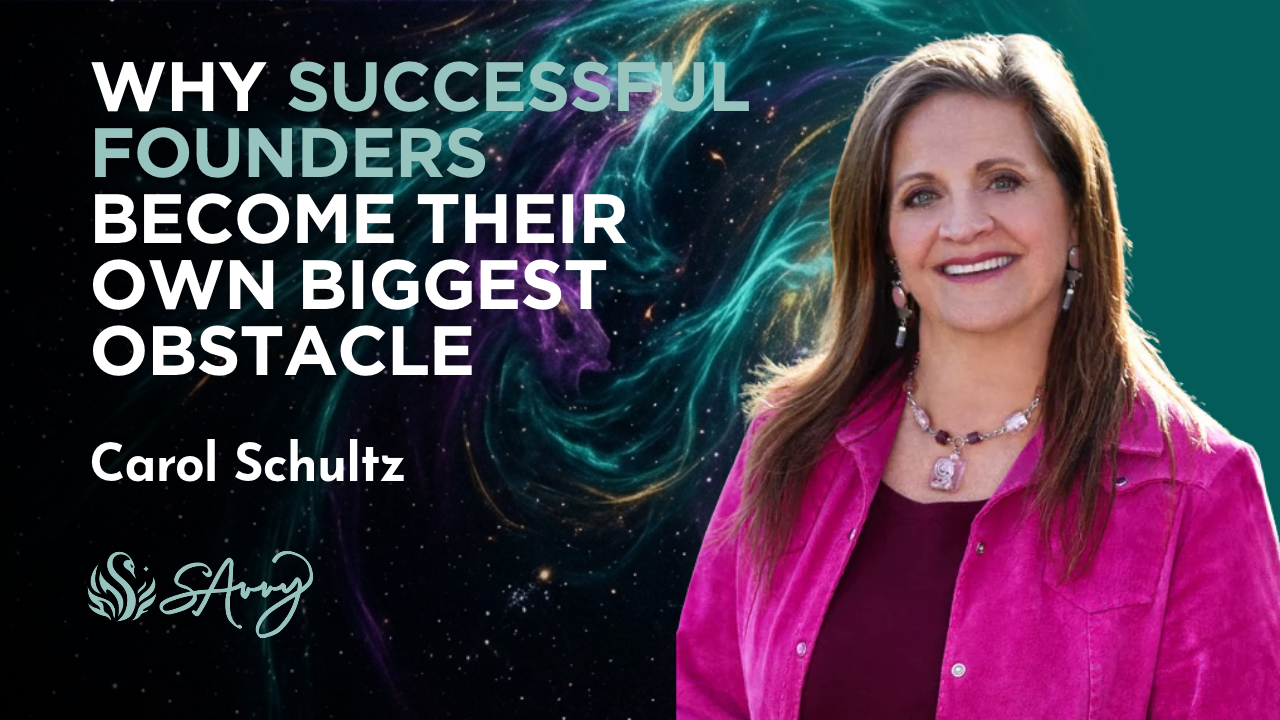
Why Carol Schultz Believes Founders Become Their Own Biggest Obstacle
What happens when the person who built a business becomes the biggest obstacle to its growth? In this episode of SAVVY SHIFT, I sit down with Carol Schultz to explore the challenges of founder leadership.
After 30 years in executive recruiting, Carol discovered a pattern among successful entrepreneurs. Many founders struggle to delegate, develop managers, and build the structures their companies need to grow.
The Hidden Cost of Doing Everything Yourself
Building a business often means taking responsibility for everything. However, those habits can become serious limitations as the company grows.
We discuss how founder leadership requires a shift from managing daily tasks to developing people and setting direction. Carol also explains why hiring talented employees rarely solves deeper organizational problems.
Without clear responsibilities, accountability, and effective communication, even experienced professionals struggle to perform.
Building Teams That Can Succeed Independently
Carol Schultz walks me through her nine step organizational framework for helping CEOs reclaim their time. We explore employee feedback, leadership training, performance reviews, and the importance of clearly defined roles.
Additionally, we discuss why companies need managers who can develop independent teams. Carol explains how a chief of staff or COO can help a growing business operate more effectively.
These decisions become especially important as founders prepare for their next stage of growth.
Why Growth Demands a Different Kind of Leadership
Scaling from $5 million to $20 million brings challenges that demand stronger systems and better decisions. As a result, founder leadership must evolve alongside the company.
Carol shares examples of business owners who struggled to release control, even after hiring capable executives. We also explore why some founders eventually benefit from appointing someone else as CEO.
The conversation highlights how self-awareness influences leadership decisions, employee trust, and long term business performance.
Carol Schultz on Building Trust and Making Better Decisions
We examine why employees need opportunities to give honest feedback without fearing consequences. Furthermore, Carol explains why effective leadership development takes continued effort and genuine commitment.
We also discuss practical uses of artificial intelligence, including how Carol reduced weeks of organizational analysis through better processes.
Ultimately, founder leadership comes down to recognizing personal blind spots and accepting the changes growth requires.
If you’re managing every detail of your business, this conversation offers practical ideas for building a stronger team. You’ll also learn how to create more room for strategic thinking and sustainable growth.