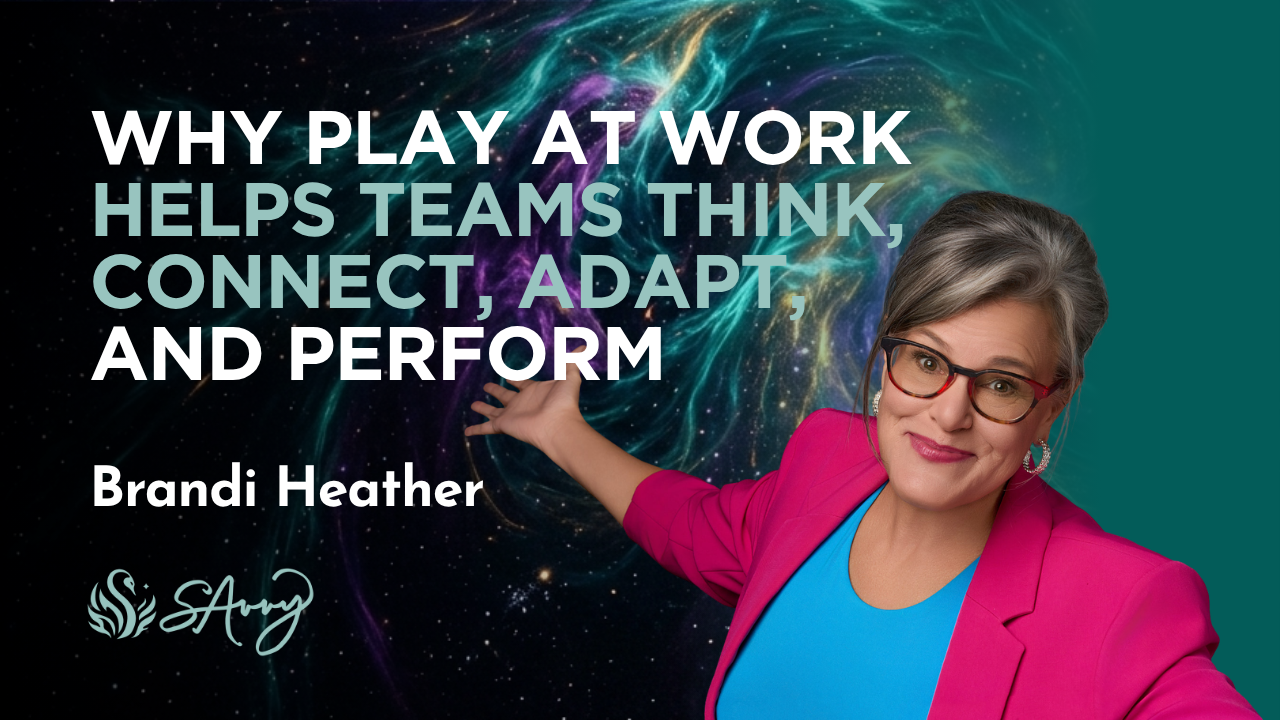
Why Brandi Heather started asking different questions
Work and play often feel like opposites, yet this conversation challenges that separation. We explore how playful intelligence can support creativity, adaptability, connection, and stronger thinking at work. It started with accessibility education, where play helped students move beyond fear and rigid thinking. As a result, they became more engaged, creative, and willing to work together.
However, play doesn’t mean adding games or forcing employees to have fun. Instead, it means noticing when people feel capable, curious, and fully engaged. Those moments reveal where playful intelligence already exists within everyday work.
What Brandi sees when work gets too serious
Many workplaces reward seriousness while treating joy as something people earn after finishing their work. Consequently, employees may learn to suppress curiosity, experimentation, and even connection. That approach can also make failure feel dangerous instead of useful.
We discuss why safe experimentation matters for innovation and resilience. Likewise, playful intelligence gives people room to test ideas without needing every attempt to succeed. Yet leaders can’t create that environment with ping pong tables or occasional social events.
Instead, they need to understand what actually energizes their people. Sometimes that means solving conflict, organizing supplies, or connecting with colleagues. Those moments might look ordinary, but they can reveal where someone does their best work.
How Heather connects safety and performance
Psychological safety comes before play. Therefore, people need enough security before they’ll take risks, speak openly, or try something unfamiliar. We explore why managers also need support, especially when leadership responsibilities create their own fear.
Meanwhile, playful intelligence can help teams identify what makes work feel lighter without ignoring difficult responsibilities. The goal isn’t constant happiness. Rather, it’s creating more moments where people can access their full knowledge, judgment, and creativity.
We also examine nervous system regulation and the role joy can play in daily life. For example, small moments of beauty, movement, laughter, or connection can interrupt constant threat awareness. Over time, playful intelligence can help people notice what restores their energy.
Building a culture people can actually use
Finally, we look at team building, offsite experiences, and the purpose behind them. Organizations often treat these activities as rewards. Instead, they can use them to maintain trust and strengthen relationships.
Bringing people into a different environment can reveal sides of them that ordinary routines hide. Still, the activity matters less than the intention behind it. Employees notice when an organization invests in their growth and connection.
Ultimately, playful intelligence isn’t about making every moment fun. It’s about understanding what helps people feel safe enough to contribute more of themselves. That shift can create stronger relationships, better ideas, and more human workplaces.
More From Brandi Heather
Website
www.brandiheather.com
Book: