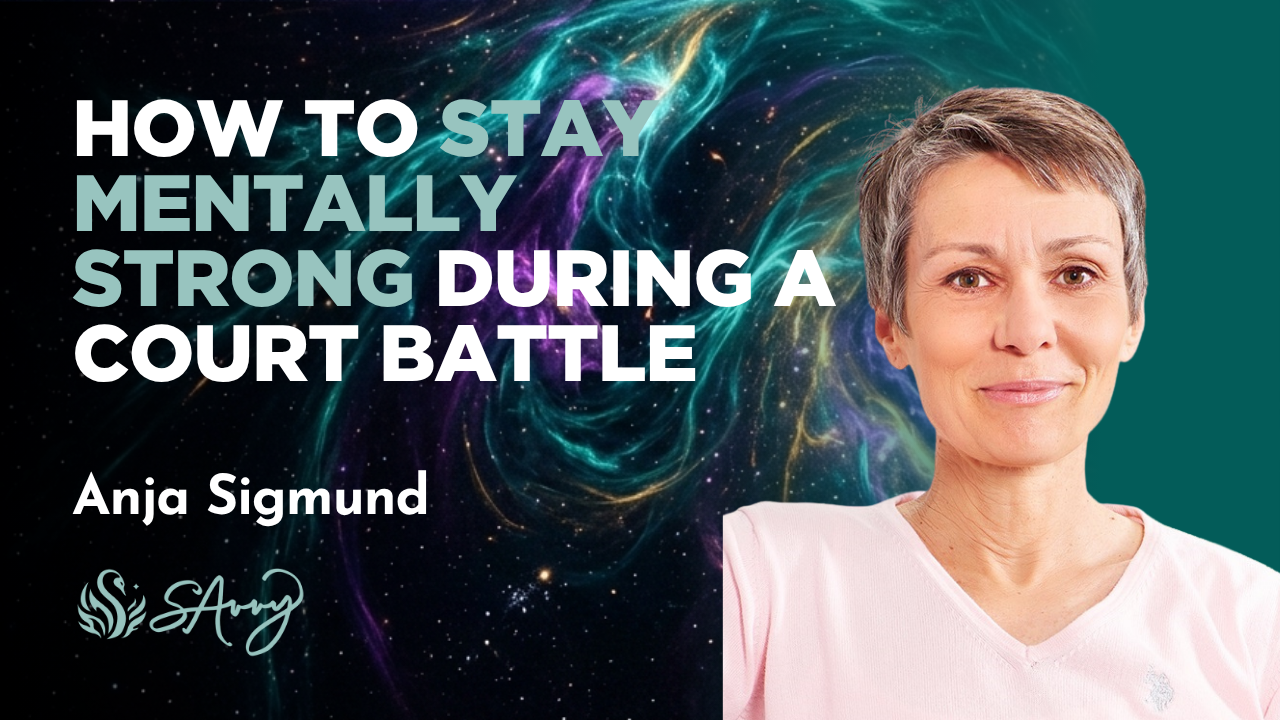
Anja opens with the story that changed her life. During a commercial lawsuit in London, she realized the case wasn’t only about facts. It was also about pressure, perception, and credibility. That shift forced her to face litigation stress in a new way. Instead of waiting to break, she searched for tools that could help her stay steady.
She explains how that search led her to kinesiology, then later to hypnotherapy and deeper self-development work. As a result, she built a method to help others manage the same kind of strain. Her story gives this episode a strong foundation, because it comes from direct experience rather than theory.
The pressure Anja Sigmund says most people miss
We talk about how legal disputes can trigger an identity crisis. When accusations clash with your values, your mind can start to spiral. Anja explains that repeated claims can shape self-doubt, distort memory, and weaken focus. In that state, litigation stress doesn’t stay in your head. It spreads through the body, your choices, and your relationships.
She shares why calming the nervous system has to come first. Then she walks through practical tools like affirmations, grounding, mindfulness, breathing, and thought interruption. Those tools matter because they help people respond with clarity instead of reacting from fear, shame, or anger.
Anja Sigmund on the body keeping score
A major part of the conversation looks at how stress shows up physically. Anja describes common tension points during legal conflict, especially in the head, throat, and stomach. She explains how kinesiology uses muscle testing and acupuncture points to locate and reduce stress patterns. That approach becomes useful when litigation stress overwhelms language and people can’t fully explain what they feel.
We also discuss children in custody conflicts and why body-based methods may help when talk therapy falls short. Anja explains that children often carry fear silently. Because of that, early support matters. The episode also explores how culture shapes openness to energy work, and why some people only accept it once intense stress leaves them searching for relief.
Beyond the case
Later, we focus on what happens after court ends. Anja makes an important point here. The end of a case doesn’t always bring closure. Many people still carry resentment, confusion, or emotional shock. Litigation stress can continue long after the paperwork stops, especially when the outcome doesn’t match the hope for justice.
That’s why she encourages people to think beyond the case itself. She talks about building routines, practicing daily regulation, and creating a vision for life after the dispute. In the end, this conversation shows that litigation stress can become a harsh teacher. Yet with the right support, people can leave the process with stronger boundaries, clearer self-awareness, and more resilience than they had before.
More from Anja Sigmund
Website: www.litigation-stress-coach.com
Explore More of Samantha SAvvy’s work:
Get your FREE Boundaries Blueprint: https://www.samanthasavvy.com/how-to-set-healthy-boundaries-without-guilt-free-boundaries-blueprint/
What’s Your Survival Style? Take the Quiz! https://www.samanthasavvy.com/survival-style-decoder/
Take the 7 Day Awakening Challenge: https://www.samanthasavvy.com/7-days
Shop SAvvy: https://www.samanthasavvy.com/browse/